TL;DR
Turning Instagram followers into email contacts is less about “finding” emails and more about guiding, qualifying, and organizing consent-based connections.
Followers already have a level of trust, but email collection still requires clear intent, public data, and compliant processes. This guide explains practical ways to convert Instagram followers into usable email contacts—without shortcuts or platform risks.
Why Convert Instagram Followers into Email Contacts?
Having Instagram followers does not guarantee ongoing reach.
Algorithms change, visibility fluctuates, and follower engagement alone rarely provides a reliable communication channel. Email remains one of the most controllable and high-conversion channels for long-term audience relationships.
For many teams, converting followers into email subscribers or contacts is the missing step between audience growth and measurable business outcomes. Unlike cold outreach, this scenario emphasizes permission, clarity, and sustained value rather than scale alone.
Platform Limitations and Data Boundaries
Instagram does not provide any official way to export follower email addresses.
Email collection must rely strictly on:
- Information users choose to make public
- Or email addresses users actively submit
Private accounts, direct messages, hidden fields, and inferred or guessed emails are out of scope. Being a follower does not imply consent to receive email communication.
Any email collection or outreach must align with applicable regulations such as GDPR and CAN-SPAM, including transparency and opt-out options.
Core Paths to Collect Emails from Instagram Followers
Rather than focusing on tools alone, effective strategies follow clear collection paths. Each path serves a different purpose and level of intent.
Path 1: Collecting Public Emails from Follower Profiles (Passive)
Some Instagram followers—especially brands, creators, and businesses—choose to publish their email addresses publicly.
Common sources include:
- Emails listed directly in the bio
- Contact buttons with email fields
- Linked websites or contact pages
This path is fully compliant and low-friction, but coverage is limited. It works best for B2B, creator partnerships, and professional accounts that are already open to contact.
Path 2: Guiding Followers to Submit Emails via External Pages (Primary Method)
This is the most widely used and sustainable approach, and the core strategy highlighted across most competitor guides.
Typical incentives include:
- Free resources (guides, templates, checklists)
- Newsletters or updates
- Early access, waitlists, or discounts
- Webinar or community registrations
The key principle is clarity. Followers should understand what they’re signing up for, how often they’ll hear from you, and what value they’ll receive. Email submission always happens on an external landing page, not directly inside Instagram.
Path 3: Using Content and Interaction to Gradually Convert Followers
Some teams use Instagram content and engagement as a bridge to email collection.
Examples include:
- Stories with clear call-to-action links
- Comment-triggered replies that direct users to a signup page
- High-engagement posts followed by a defined next step
Interaction alone does not equal consent. The final step must still be an explicit email submission by the user.
Path 4: Identifying Business Followers with Public Contact Details (B2B-Focused)
In many cases, a portion of your followers are already businesses, creators, or professional accounts.
These followers may have:
- Public business emails
- Websites with contact pages
- Clear collaboration or partnership intent
The challenge is not availability, but systematic identification and organization, especially as follower counts grow.
Using DolphinRadar Business to Organize Follower Emails at Scale
As audiences grow, manual review of follower profiles becomes inconsistent and time-consuming. Important signals are missed, emails are scattered, and there’s no clear structure for follow-up.
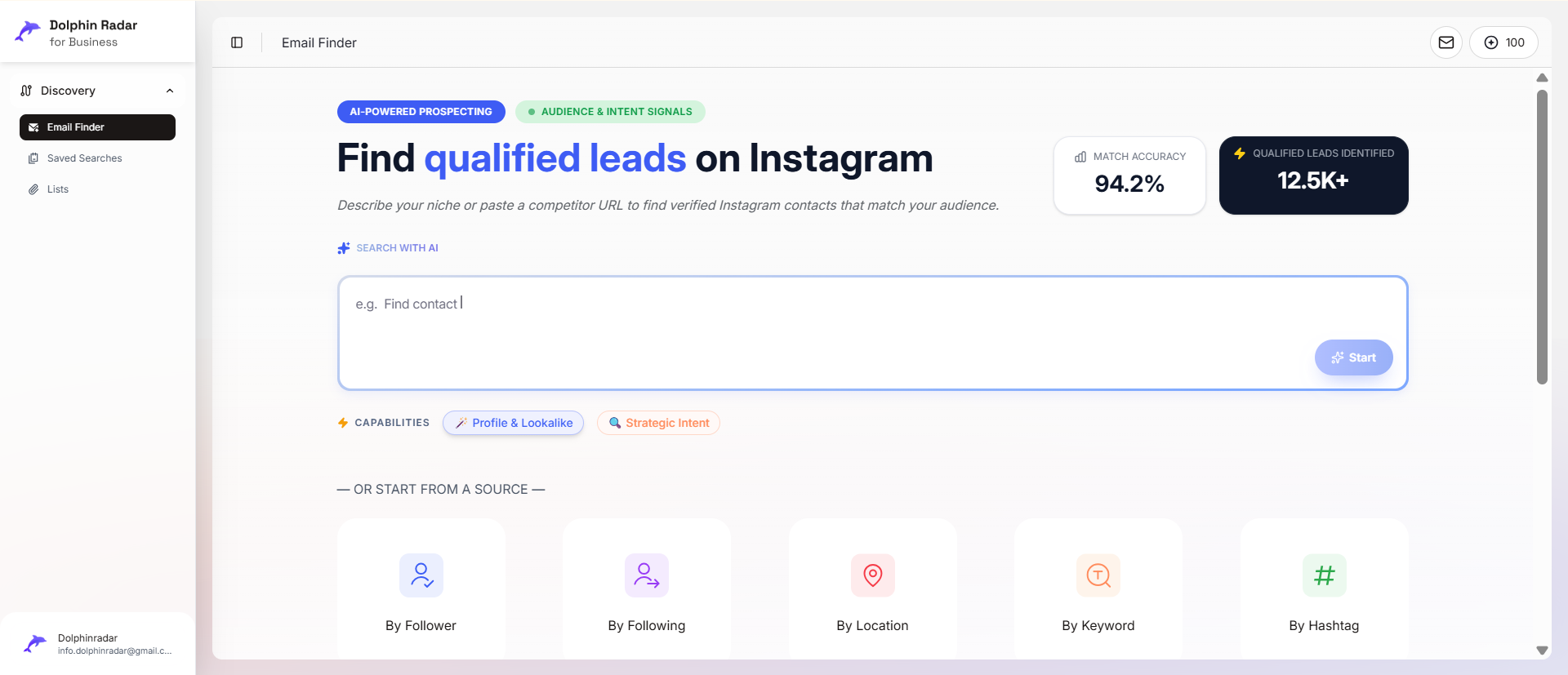
DolphinRadar Business is designed to turn Instagram follower data into a structured, repeatable email organization workflow, built specifically for business teams.
How Teams Use DolphinRadar Business in Practice
1. Start from Instagram-native sources
Teams begin discovery using followers, following lists, hashtags, keywords, or locations—focusing on segments that align with their business goals.
2. Filter followers using public profile signals
Accounts are reviewed based on profile type, bio keywords, website presence, and business relevance, helping teams separate casual followers from professional contacts.
3. Surface public business emails with Email Finder
DolphinRadar Business identifies verified email addresses that users have chosen to make public on Instagram profiles or linked public pages—without accessing private data or inferring contact details.
4. Organize followers and emails into structured lists
Leads can be grouped by use case, such as marketing, partnerships, or business development, while retaining profile context for future communication.
5. Export for email tools or CRM systems
Qualified lists can be exported in CSV format and integrated into email platforms or CRM workflows, ensuring only reviewed and relevant contacts are used.
This approach emphasizes quality, compliance, and long-term usability rather than email volume.
Privacy, Compliance, and Risk Considerations
Responsible email collection requires clear boundaries.
- Followers are not automatically email subscribers
- Email purpose and frequency must be transparent
- Opt-out mechanisms are required
- Mixing consent-based emails with scraped lists increases risk
Short-term shortcuts often lead to deliverability and reputation issues over time.
Ethical Use of Follower Data
Best practices include:
- Offering genuine value
- Respecting user intent and choice
- Maintaining reasonable communication frequency
Practices to avoid:
- Forced or misleading collection tactics
- Treating engagement as consent
- Using follower data outside its intended context
Ethical workflows protect both your audience and your brand.
Key Takeaways
Collecting email addresses from Instagram followers is fundamentally about trust and clear pathways, not extraction.
Teams that rely on public data, explicit opt-in, and structured organization build email lists that are more responsive, compliant, and sustainable over time.
FAQ
Can you get email addresses from Instagram followers?
Yes, but only when followers choose to share them publicly or submit them through a clear opt-in process.
Is it legal to collect emails from Instagram followers?
Yes, when collection is transparent, consent-based, and compliant with applicable regulations.
Why can’t I export follower emails directly from Instagram?
Instagram does not provide access to private contact data or email exports.
What’s the most effective way to convert followers into email subscribers?
Offering clear value through external signup pages remains the most reliable method.
Do Instagram followers respond well to email marketing?
When properly segmented and consent-based, follower-originated email lists often outperform cold lists.
Should I use tools to organize follower emails?
Yes. Structured tools help maintain context, compliance, and consistency as audiences grow.
Author: Business Dolphin Team
Last updated: January 2026